

Service: Floorboard Repairs | Flooring Type: Timber | Location: Box Hill South, Melbourne
Every home tells a story through its floors, and in this Box Hill South project that story needed a new chapter. The homeowners came to Croydon Floors with a tired, dated chipboard floor that no longer suited their home or the way they lived in it. Our brief was clear: pull up the old chipboard and replace it with warm, characterful second-hand Tasmanian Oak that would sit seamlessly alongside the home’s existing timber. The result is a floor that looks like it has always belonged — solid underfoot, rich in tone, and built to last for decades.
The Brief: A Chipboard Floor Past Its Prime
Chipboard (also known as particleboard) was a common flooring and subfloor material in Australian homes built through the mid-to-late twentieth century. It was inexpensive and quick to lay, but it was never designed to be a long-term, feature-quality floor. Over time, chipboard can swell, sag and lose its structural integrity, particularly if it has been exposed to moisture or heavy foot traffic. In this Box Hill South home, the chipboard had reached the end of its useful life. It felt hollow underfoot, looked flat and uninspiring, and simply didn’t match the quality of the surrounding rooms, which featured beautiful solid timber boards.
The homeowners wanted more than a patch-up. They wanted a genuine timber floor that would restore consistency across the home and add real warmth and value.
Why Chipboard Struggles Underfoot
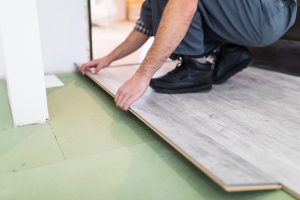
Unlike solid hardwood, chipboard is made from compressed wood particles bonded with resin. It cannot be sanded back and refinished the way solid timber can, which means that once it starts to show wear, there are few options beyond replacement. It also lacks the density, acoustic quality and longevity of natural hardwood. For a home where the rest of the flooring was solid timber, keeping the chipboard would always leave one area feeling like the odd one out. Replacing it with real timber through a proper timber floor installation was the obvious long-term solution — one that would eliminate the ongoing issues and deliver a floor that can be maintained, sanded and recoated for generations.
Our Solution: Second-Hand Tasmanian Oak
For this project, we sourced second-hand Tasmanian Oak flooring. Tasmanian Oak is one of Australia’s most popular and versatile hardwoods, prized for its fine, even grain and its ability to take stains and finishes beautifully. Choosing reclaimed, second-hand boards brought two clear advantages. First, recycled timber carries a depth of character and a settled, mature tone that brand-new boards can take years to develop. Second, reusing existing timber is a genuinely sustainable choice — it gives quality hardwood a second life rather than sending it to landfill and reduces demand for newly milled timber.
Second-hand hardwood does come with its own challenges. Reclaimed boards need to be carefully sorted, de-nailed, checked for soundness and prepared before installation. This is where experience matters — matching board widths, grain and colour so the finished floor reads as one cohesive surface rather than a patchwork.
The Repair Process, Step by Step
Our team began by carefully removing the existing chipboard, taking care to protect the surrounding original flooring and the home’s skirting and architraves. Once the chipboard was up, we assessed and prepared the subfloor to ensure a level, stable and dry base — a critical step that determines how well any timber floor performs over its lifetime.
We then laid the second-hand Tasmanian Oak, fitting each board to align with the direction and layout of the adjoining rooms so the transition through the doorway would flow naturally. You can see this in the finished project: the boards run cleanly from one space into the next, with the grain and tone carrying through the threshold rather than stopping abruptly at the door.
With the new boards installed, we moved on to sanding and polishing the floor to bring the timber back to life and blend the repaired section with the surrounding boards. A quality sealing and coating was then applied to protect the surface, giving it durability against everyday wear while enhancing the natural warmth of the grain. We even worked neatly around existing features such as the in-floor heating vent, integrating it cleanly into the new floor.
The Finished Result
The transformation speaks for itself. What was once a flat, dated chipboard floor is now a rich, characterful Tasmanian Oak surface that blends seamlessly with the rest of the home. Stand in the doorway and it’s almost impossible to tell where the original flooring ends and the new second-hand boards begin — which is exactly the outcome we set out to achieve. The floor is now solid underfoot, easy to maintain, and can be re-sanded and recoated in years to come, making it a true long-term investment in the property.
Considering Floorboard Repairs for Your Home?
This Box Hill South project is a great example of how thoughtful floorboard repairs can completely change the feel of a home. Whether you’re dealing with tired chipboard, damaged boards, or a floor that simply no longer matches the rest of your home, our team can help. With more than four decades of experience across Melbourne, we handle everything from timber floor installation and repairs to sanding, coating and timber staining.
Take a look at more of our completed projects, or get in touch for a free, no-obligation quote. We’d love to help you bring your floors back to their best.
- By: Croydon Floors
- Category: Uncategorised
- 0 comment