
Blackbutt Timber Flooring: Why It Remains One of Australia’s Most Popular Hardwoods
When it comes to choosing timber flooring for Australian homes, a handful of native hardwoods consistently come out on top. Among them, blackbutt has earned a reputation as one of the most versatile and reliable species available, valued equally by builders, designers, and homeowners.
What makes blackbutt timber flooring so popular is its combination of durability, visual warmth, and adaptability. It suits almost any interior style, performs well in high-traffic areas, and offers natural properties that few other species can match. In this article, we take a detailed look at what makes blackbutt a standout choice and what you should consider before committing to it for your home.
What Is Blackbutt Timber?
Blackbutt (Eucalyptus pilularis) is a native Australian hardwood found predominantly along the coastal regions of New South Wales and southern Queensland. It is one of the tallest eucalyptus species, growing up to 70 metres in its natural habitat, and is commercially harvested from both plantation and sustainably managed native forests.
The timber has a pale, honey-toned colour range that sits between light straw and mid-brown, with a relatively straight and even grain pattern. This neutral palette is one of the reasons it works so well across a wide range of interior design styles, from traditional to minimalist.
Durability and Hardness
One of the defining characteristics of blackbutt timber flooring is its durability. With a Janka hardness rating of approximately 9.1 kN, it sits firmly in the medium-to-hard range of Australian hardwoods. To put that in context, it is harder than Tasmanian oak (5.5 kN) and comparable to spotted gum (11.0 kN), making it well suited to residential environments with moderate to high foot traffic.
This hardness translates to strong resistance against everyday wear, including scratches from furniture, scuffing from shoes, and denting from dropped objects. For families with children and pets, this resilience is a practical advantage that keeps the floor looking good over time.
Natural Fire Resistance
Blackbutt is rated as one of the most naturally fire resistant flooring timbers available in Australia. It holds a BAL (Bushfire Attack Level) rating suitable for construction in bushfire-prone areas, which makes it a preferred choice for homes in outer suburban and semi-rural parts of Melbourne where bushfire risk is a consideration.
This natural fire resistance is an inherent property of the timber itself, not a treatment applied after milling. The density of blackbutt’s cellular structure makes it slower to ignite and less likely to sustain flame than softer, less dense species. For homeowners in fire-risk areas, this property can be a genuine differentiator when selecting flooring materials.
Aesthetic Appeal and Design Versatility
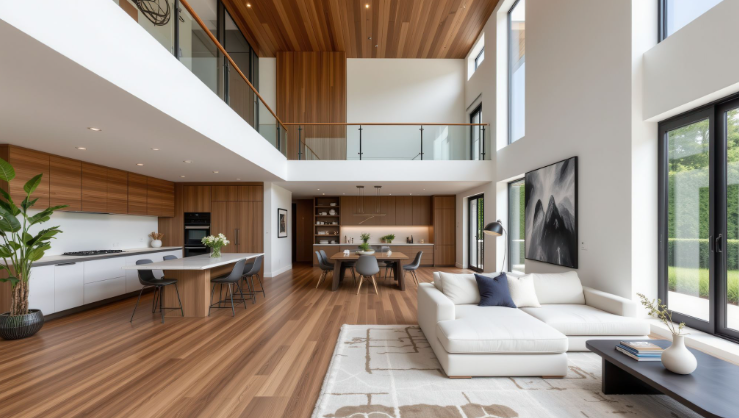
Blackbutt’s light, neutral colour palette makes it one of the most design-flexible hardwoods on the market. Its pale tones create a sense of space and openness in smaller rooms, while its subtle grain pattern avoids the visual busyness that some other species bring. This makes it a natural fit for contemporary flooring designs that favour clean lines, open plans, and neutral colour schemes.
Works with Multiple Design Styles
While blackbutt is a natural partner for modern and Scandinavian-inspired interiors, it also works well in coastal, farmhouse, and traditional settings. The timber takes stain well, so if the natural colour is too light for your taste, it can be stained to a darker shade without losing its grain character. While, alternatively, a lime wash or white wash can lighten it further for a relaxed, beachy aesthetic.
Board Width and Format
Blackbutt is available in a range of board widths, from standard 80mm strips through to wide 130mm and 180mm planks. Wider boards are increasingly popular in contemporary flooring installations because they create fewer joins, giving the floor a more expansive and modern feel. The board format you choose will depend on the size of your rooms, the look you are trying to achieve, and your budget.
Installation Considerations
Installing blackbutt timber flooring properly is essential to getting the most out of the product. Timber is a natural material that responds to its environment, so preparation and technique matter.
Acclimatisation
It is suggested that before installation, the timber should be acclimatised to the environment of the room where it will be laid. This typically means storing the boards in the space for at least two weeks to allow the moisture content to stabilise. Skipping this step can result in expansion or contraction after installation, leading to gaps, buckling, or cupping.
Subfloor Preparation
The subfloor must be clean, dry, level, and structurally sound. For concrete slabs, a moisture test should be conducted to ensure the slab is not releasing excess moisture that could damage the timber over time. For timber subfloors, any loose or damaged boards should be replaced before the new floor is laid.
Installation Methods
Blackbutt can be installed using a tongue and groove secret-nail method, which provides a tight, secure fit with no visible fixings. It can also be direct-stuck to concrete using flexible adhesive, or floated using an engineered blackbutt product with a click-lock profile. The best method depends on your subfloor type, budget, and the specific product you choose.
Regardless of the installation method, professional fitting is essential. Timber that is not installed correctly can develop gaps, cupping, or movement over time, all of which compromise both the appearance and the structural integrity of the floor. A professional installer will also ensure expansion gaps are left around the perimeter of the room to allow the timber to respond naturally to seasonal humidity changes.
Blackbutt vs Other Australian Hardwoods
When comparing blackbutt to other popular Australian hardwoods, the key differences come down to colour, hardness, and price.
Spotted gum is harder and more characterful, with a dramatic colour variation and wavy grain that makes every floor unique. It is generally more expensive than blackbutt and suits homeowners looking for a bold, statement floor. Tasmanian oak sits at the other end of the spectrum, being softer, lighter, and more affordable. It is well suited to bedrooms and lower-traffic rooms but may not hold up as well in busy living areas or hallways.
Blackbutt occupies the middle ground: hard enough for most residential applications, neutral enough to complement any interior style, and priced competitively against other premium hardwoods. For many Melbourne homeowners, it strikes the best balance between performance, aesthetics, and value.
Coating and Finishing Options
The right finish protects your blackbutt timber flooring from moisture, wear, and UV damage while enhancing its natural colour and grain. The most common options for residential installations are water-based polyurethane and natural oil finishes.
Water-Based Polyurethane
Water-based systems like Bona Traffic provide excellent durability, dry quickly, and will not yellow over time. This is particularly important for blackbutt, as its light colour makes any yellowing from solvent-based coatings highly visible. A matte or satin sheen is the most popular choice for a natural, understated look.
Natural Oil Finishes
Oil finishes penetrate the timber rather than sitting on top of it, giving the floor a very natural appearance and feel. They require more frequent maintenance than polyurethane but are easier to spot-repair, as individual boards can be re-oiled without needing to treat the entire floor.
Maintenance and Long-Term Care
Maintaining blackbutt timber flooring is straightforward. Regular dust mopping or vacuuming prevents grit from scratching the surface, and occasional damp mopping with a pH-neutral cleaner keeps the floor looking its best. Avoid using steam mops, excessive water, or harsh chemicals, as these can damage both the coating and the timber.
When the coating eventually wears through in high-traffic areas, a professional sand and recoat will restore the floor to its original condition. Solid blackbutt boards can typically be sanded three to five times over their lifespan, giving the floor a service life measured in decades rather than years.
It is worth noting that prevention is always cheaper than repair. Placing mats at entry points, using felt pads under furniture legs, and cleaning up spills promptly will all extend the life of the coating and reduce the frequency of professional maintenance. These small habits make a significant difference to how well the floor holds up over time, particularly in busy households.
For homes with pets, keeping nails trimmed and wiping muddy paws at the door will go a long way toward protecting the surface. Blackbutt’s natural hardness gives it an advantage here, but no timber floor is immune to neglect.
Get Expert Advice on Blackbutt Flooring for Your Home
At Croydon Floor Services, we have been supplying, installing, and finishing Australian hardwood floors across Melbourne for over 43 years. Whether you are laying new blackbutt flooring, restoring an existing floor, or choosing between species for a renovation, our team can guide you through every step. We work across homes of all sizes, from single-room installations through to full-house refurbishments, and we stand behind every job with a commitment to quality craftsmanship.
Contact Rob Collins on 0411 744 969 or email rob@croydonfloors.com.au for a free, no-obligation quote. We are happy to visit your property, assess your subfloor, and provide tailored advice on the best approach for your home.
- By: Croydon Floors
- Category: Floating Floors
- 0 comment