
Commercial Flooring Melbourne: What Gyms, Schools, and Halls Need to Know
Timber floors in commercial spaces take far more punishment than anything a residential home could dish out. Think about a school gymnasium during a basketball rehearsal or match, a community hall hosting weekend markets, or a dance studio running back-to-back classes. These floors absorb thousands of footsteps every week, endure heavy equipment, and need to look presentable the entire time.
That level of demand is exactly why commercial flooring Melbourne projects require a fundamentally different approach to selection, installation, and maintenance. The stakes are higher, the surfaces are larger, and the margin for error is smaller.
In this article, we cover what makes commercial timber flooring different from residential, the specific requirements of high-traffic spaces like gyms and schools, and what to expect from a professional sanding and finishing process.
What Makes Commercial Flooring Different from Residential?
The core difference comes down to traffic volume and use case. A family home might see four or five people walking across the floor daily. A school gymnasium or community hall can see hundreds in a single session.
This means commercial floors need to withstand significantly more impact, abrasion, and moisture exposure than residential surfaces. The timber species, coating system, and maintenance schedule all need to be calibrated for higher performance. A coating that lasts five years in a bedroom might deteriorate within twelve months on a basketball court if it is not fit for purpose.
Experienced commercial flooring Melbourne specialists account for these differences from the start. The right provider will assess the space, recommend appropriate timber and finish combinations, and build a maintenance plan that keeps the floor performing over the long term.
Common Commercial Flooring Applications
Gymnasiums and Sports Courts
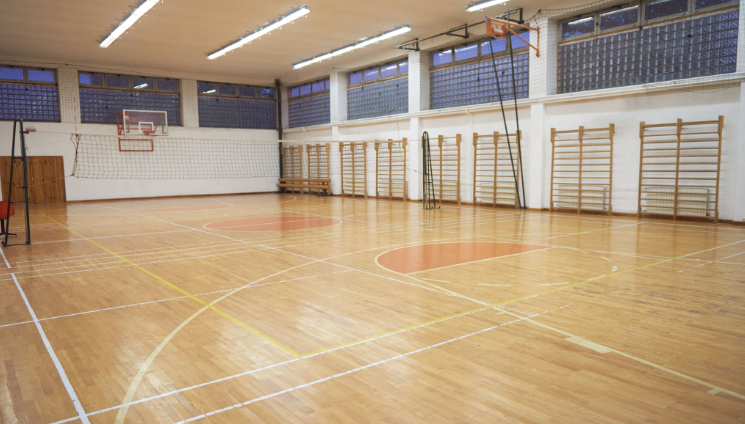
Gymnasiums are arguably the most demanding environment requiring shock-resistant yet aesthetic flooring. The timber needs to handle impact from running, jumping, and dropped equipment while maintaining a consistent, non-slip surface. Beyond the floor itself, sport line marking is a critical component. Multi-use courts require clearly defined markings for different sports, typically basketball, netball, volleyball, and badminton, all overlaid on the same surface using colour-coded paint systems.
The line marking process requires precision and must be applied between coats of polyurethane to ensure the lines are sealed beneath the protective finish. This keeps them durable and prevents peeling or fading under heavy use.
Schools and Educational Facilities
School halls, classrooms with timber flooring, and multipurpose rooms face a unique combination of heavy foot traffic, furniture movement, and occasional spills. The flooring needs to be tough enough to handle wheeled trolleys and stacked chairs being dragged across the surface, while still being safe for young children who might slip or fall.
Schools also operate on tight budgets and maintenance windows. Summer holidays are typically the only viable time for a full sand and recoat, which means the job needs to be planned well in advance and completed efficiently within the break period.
Community Halls and Event Spaces
Community halls host everything from dance classes and yoga sessions to wedding receptions and trade exhibitions. The flooring needs to accommodate all of these uses without showing premature wear. High-quality timber floor coatings are essential here, as the surface needs to resist scuff marks from shoes, minor spills, and the weight of temporary staging or furniture.
Dance Studios and Fitness Centres
Dance studios have specific requirements around floor flex and surface friction. Dancers need a surface that provides just enough grip without being sticky, and enough give to absorb impact from jumps and landings. Fitness centres face similar demands, with the added challenge of dropped weights, rubber mat residue, and cleaning chemicals that can degrade coatings over time.
Choosing the Right Timber for Commercial Applications
Not every timber species is up to the standard that commercial flooring Melbourne projects demand. The key factors to consider are hardness, stability, and availability.
Hardness Ratings Matter
The Janka hardness scale measures how resistant a timber species is to denting and wear. For commercial applications, you want a species that sits high on this scale. Australian hardwoods like spotted gum and blackbutt are excellent choices due to their natural density and resistance to impact.
Stability Under Stress
Commercial spaces often experience significant fluctuations in temperature and humidity, particularly gymnasiums with large open areas and community halls that may not have climate control running around the clock. Timber species with low shrinkage rates handle these fluctuations better, reducing the risk of cupping, crowning, or gaps appearing between boards.
Board Profile and Installation Method
Most commercial timber floors use a tongue and groove profile, which provides tight seams and structural integrity across large surface areas. The boards are typically secret-nailed to a timber or plywood subfloor, creating a stable, unified surface that can handle concentrated loads from equipment and foot traffic.
The Commercial Floor Sanding Process
Sanding a commercial floor is a significantly larger operation than a residential job. The surface area is greater, the existing coatings are often thicker and more industrial, and the logistics of working in a facility that may need to reopen on a tight deadline add complexity.
A trusted commercial flooring Melbourne team will typically follow a structured process to deliver a consistent result across large surface areas.
Assessment and Preparation
Before sanding begins, the floor is inspected for structural issues, loose boards, protruding nails, and moisture levels in the subfloor. Any repairs are completed first, as sanding over damaged areas will only mask problems temporarily.
Sanding and Levelling
Commercial drum sanders and edge sanders are used to strip back old coatings and level the surface. In large spaces like gymnasiums, this is done in multiple passes with progressively finer grits to achieve a smooth, even base. Dust extraction systems are essential to maintain air quality and minimise cleanup.
Sport Line Marking
For multi-sport facilities, sport line marking is applied after the initial seal coat has dried. Each sport’s court boundaries are marked using specialised paint in designated colours, following the relevant governing body’s specifications for dimensions and line widths. The lines are then locked in under subsequent coats of polyurethane, protecting them from wear and ensuring they remain sharp and visible for years.
Coating and Curing
Commercial floors typically receive multiple coats of high-performance polyurethane. Water-based systems like Bona Traffic are popular for their durability, low odour, and fast curing times, which is critical when working within tight school holiday or facility closure windows. Each coat needs adequate drying time between applications, and the final coat requires a full curing period before the floor can be returned to service.
Maintenance for Commercial Timber Floors
Even the best commercial flooring Melbourne has to offer will deteriorate without a proper maintenance plan. Floors should be maintained on a regular schedule to extend the life of the coating and delay the need for a full re-sand.
Daily and Weekly Care
Dust mopping or vacuuming should be done daily in high-traffic spaces to prevent grit from scratching the coating. Wet mopping with a pH-neutral cleaner designed for polyurethane-coated timber floors should be carried out weekly. Avoid using household cleaning products, steam mops, or excessive water, as these can damage the coating and the timber beneath.
Periodic Maintenance Coats
Depending on traffic levels, a maintenance coat of polyurethane can be applied every two to five years without the need for a full sand. This refreshes the surface, fills minor scratches, and extends the life of the floor significantly. For a gymnasium hosting daily training sessions, a maintenance coat every two years is a reasonable expectation.
Knowing When to Re-Sand
If the coating has worn through to bare timber in high-traffic areas, or if the floor shows persistent scuffing that cleaning cannot resolve, it is time for a full sand and recoat. Delaying this can lead to moisture penetration and structural damage that costs significantly more to repair than a scheduled re-sand would have.
Why Professional Installation and Maintenance Matters
Commercial flooring is not a DIY job. The scale of the work, the specialised equipment required, and the technical knowledge involved in selecting the right timber, coating, and maintenance schedule all demand professional expertise. A poorly sanded gymnasium floor or an incorrectly applied coating system can result in premature failure, safety hazards, and expensive rework.
When selecting a commercial flooring Melbourne provider, look for a team with demonstrated experience across gymnasiums, schools, and large-format spaces. Ask to see examples of previous work and confirm they use professional-grade sanding equipment and high-performance coating systems.
Get a Quote for Your Commercial Flooring Project
At Croydon Floor Services, we have over 43 years of experience delivering commercial flooring solutions across Melbourne. From school halls and gymnasiums to dance studios and community centres, our team handles every aspect of the job, including sanding, coating, repairs, and court markings.
Whether you need a full sand and recoat during the school holidays or ongoing maintenance for a multi-court facility, we deliver professional results on time and on budget.
Contact Rob Collins on 0411 744 969 or email rob@croydonfloors.com.au for a free, no-obligation quote on your commercial flooring project.
- By: Croydon Floors
- Category: Floating Floors
- 0 comment