
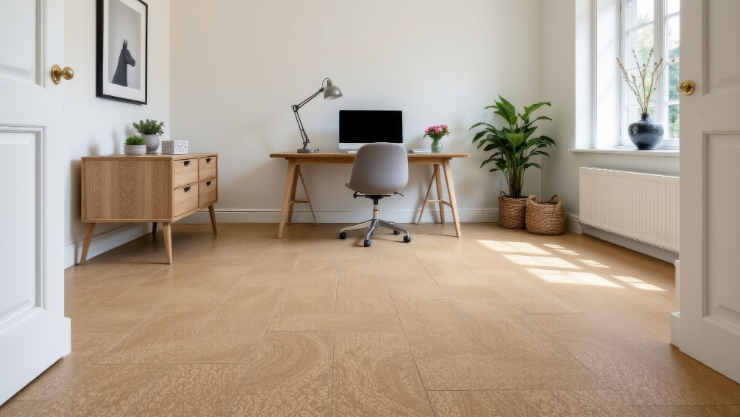
Cork Flooring Installation and Care: How to Get 40 Years Out of Your Floor
You’ve made the decision. The samples have been compared, the quotes accepted, and the date is locked in. Now comes the part nobody talks about at the showroom: how do you actually protect this investment once the installers have gone?
For Melbourne homeowners, cork flooring is one of the most rewarding choices you can make warm underfoot, naturally sound-absorbing, and kinder to joints than timber or tile. But the floors that reach 40 years of genuine service aren’t simply the ones that were laid well. They’re the ones that were maintained consistently, resealed at the right intervals, and treated with the attentiveness that any natural material deserves.
This guide covers everything you need to know about getting the most from your floor from what happens in the first 30 days after your cork flooring installation is complete, through to the maintenance decisions that determine whether you’re refinishing at year 15 or replacing at year 10.
What You’re Actually Working With
Before you can care for cork flooring properly, it helps to understand what it’s made of.
Cork is harvested from the bark of the Quercus suber oak a process that doesn’t harm the tree and can be repeated roughly every nine years. That renewable harvesting cycle is part of what makes it one of the more genuinely sustainable floor coverings available, a quality Sustainability Victoria recognises in its guidance on energy-efficient design and thermally effective building materials.
Structurally, cork is a natural cellular material millions of microscopic air-filled cells arranged in a honeycomb pattern. This gives it characteristic softness underfoot, effective acoustic dampening, and genuine thermal insulation. Recent peer-reviewed research published in BioResources found that cork composite wood flooring outperformed commercial solid wood flooring in structural bending performance confirming that a well-installed cork flooring system is not just comfortable but genuinely durable under load.
Those cellular properties also make cork responsive to its environment. It expands slightly in humidity and contracts when conditions dry out. It can be compressed under sustained point pressure. It fades with prolonged exposure to direct sunlight. These aren’t flaws they’re characteristics of a living material, and knowing them is the starting point for protecting your floor well.
The First 30 Days: Setting Your Floor Up to Last
The period immediately following installation is the most consequential of your floor’s life. Cork flooring needs time to acclimatise and for any adhesives or sealants to cure fully before being subjected to normal household use.
During the first 48 to 72 hours, keep foot traffic to a minimum and avoid all contact with water. If your floor has been sealed as part of installation which it should be that coating needs to cure undisturbed. Introducing moisture or heavy load before curing is complete can result in adhesion problems that won’t become visible for months.
In the first month, maintain a stable indoor environment where possible. Sudden swings between high and low humidity are harder on a newly installed floor than on one that has acclimatised over time. Running a dehumidifier in summer and avoiding extended periods of open windows during rain will help your floor settle evenly across its full area.
This is also the moment to establish furniture protection habits before they become an afterthought. Fit felt pads to all chair and table legs immediately. For heavy pieces, use wide-based coasters to distribute load. These simple steps prevent the concentrated point pressure that can leave permanent impressions impressions that, unlike surface scratches, cannot be sanded away.
Day-to-Day Cork Floor Maintenance
Good cork floor maintenance is less demanding than most homeowners expect but it requires consistency. The enemy of a well-finished floor isn’t dramatic incidents; it’s the slow accumulation of grit, moisture, and small oversights.
Cleaning routine
Sweep or vacuum with a soft attachment at least twice a week in high-traffic areas. Fine particles of grit and sand act like sandpaper against the surface finish every time someone walks across them the damage is invisible day to day but cumulative over months and years.
For damp mopping, use a well-wrung microfibre mop with a pH-neutral timber floor cleaner diluted in cool water. The mop should be damp, not wet. Excess moisture is the primary maintenance threat, and flooding the floor during cleaning can cause swelling at seams and undermine the adhesive bond beneath. Wipe in the direction of the floor grain, working in sections and allowing the surface to dry as you go.
Avoid steam mops, ammonia-based cleaners, abrasive scrubbers, and products designed for vinyl or tile these will strip or cloud your floor’s protective coating and expose the cork flooring beneath to damage.
Spill management
Wipe up spills immediately. Cork’s sealed surface is water-resistant, not waterproof prolonged contact with liquid, particularly at seams or edges, can penetrate the finish and cause irreversible swelling or staining. Consumer Affairs Victoria’s guidance on building and renovating your home recommends that homeowners understand the ongoing maintenance obligations for the materials they choose a reminder worth keeping in mind as you settle into life with a natural floor.
The Enemies of Cork: What Shortens the Lifespan
If you want 40 years from your floor, it helps to know what works against that goal.
Moisture and mould
Sustained moisture exposure is the single greatest threat to cork longevity whether that’s surface moisture from cleaning or spills, or subfloor moisture rising through an inadequately prepared base. If water penetrates beneath tiles or planks and conditions are right, mould can develop quickly and invisibly. The Victorian Department of Health’s guidance on removing mould at home makes clear why prevention is the appropriate strategy. Once mould establishes beneath a floor, remediation is significantly more disruptive than the precautions that would have prevented it.
In areas with sinks, dishwashers, or external doors, place breathable mats never rubber-backed to protect high-risk zones. Breathable mats allow the floor beneath to ventilate; rubber traps moisture against the surface and can cause discolouration or seal breakdown over time.
Sunlight and UV exposure
Cork contains natural pigments that respond to UV light. Prolonged direct sun exposure causes fading and can accelerate the degradation of the surface coating. In Melbourne homes with north or west-facing rooms, this is a real consideration and unlike moisture damage, which often announces itself through swelling or discolouration, UV fading is gradual and easy to overlook until it becomes pronounced. By that point, the contrast between sun-exposed areas and those protected under rugs or furniture can be stark.
UV-filtering window film, blinds, or curtains in sun-exposed areas protect both colour and finish. Moving rugs and furniture periodically also ensures any fading occurs evenly across the floor rather than in visible, fixed patterns.
Abrasion and point pressure
High-heeled shoes, particularly stilettos, can dent cork under their concentrated load. The same applies to heavy appliances dragged rather than lifted, and to office chairs with hard castors replace these with soft-wheeled alternatives or use a chair mat. Sharp-edged furniture legs without felt padding are a consistent source of damage. Once a gouge passes through the sealant layer into the cork itself, it’s difficult to address without professional refinishing.
Resealing: The Step Most Homeowners Miss
Your floor’s sealant is what protects the cork flooring beneath. It is not permanent.
In a typical Melbourne household, floors in moderate-traffic areas will need resealing every five to ten years. High-traffic zones hallways, living rooms, kitchen entries may need attention every three to five years. The clearest indicator is a gradual dulling of sheen and increasing difficulty cleaning the surface; if water no longer beads when it contacts the floor, the protective layer has worn through.
It’s worth inspecting your floor annually rather than waiting for obvious signs of deterioration. In most cases, a floor that is resealed before it wears through entirely is far easier and cheaper to restore than one where bare cork has been exposed to foot traffic and moisture for an extended period. Running your hand across the surface in a high-traffic area and comparing it to a low-traffic spot under a rug or behind a door is a simple way to gauge relative wear across the floor.
Resealing is best handled by a professional flooring specialist. The floor must be cleaned and lightly abraded before a new coat is applied, and the product used must be compatible with the existing finish. Applying a new coat over a compromised or contaminated surface can cause adhesion failure, cloudiness, or uneven sheen visible problems that are expensive to reverse.
The encouraging reality: unlike many floor types, cork can be refinished rather than replaced when wear becomes significant. If you’re weighing whether a floor has enough life left, our guide to refinish rather than replace walks through how that decision is made. In most cases, a well-installed floor with sound structure beneath can be brought to near-new condition at a fraction of replacement cost.
Why Professional Installation Matters More Than You’d Think
Every maintenance habit described in this article depends on one thing being true: your floor was installed correctly from the beginning.
Having cork professionally installed in Victoria means engaging a builder working under domestic building work regulations, which carry consumer protection obligations on both sides of the contract. The Victorian Building Authority’s guidance on what constitutes domestic building work explicitly names cork as a regulated floor covering something worth understanding before signing a contract.
A proper installation involves several non-negotiable steps. Moisture testing of the subfloor must occur before laying begins cork is sensitive to moisture rising from below, and skipping this step is the single most common cause of early failure. Thorough surface preparation ensures the adhesive bonds uniformly across the entire area rather than in patches that will flex and fail under foot traffic. Expansion gaps must be maintained at all walls, thresholds, and fixed obstacles to allow the floor to move with seasonal humidity changes without buckling or gapping. Finally, a quality seal coat applied to manufacturer’s specification provides the protective layer that all subsequent maintenance depends on.
What this means in practice: a flooring contractor who works quickly and charges less than the market rate may be cutting corners on one or more of these steps. Cork flooring Melbourne homes can tolerate you don’t notice it immediately. The problems typically emerge between 18 months and three years in, by which point the warranty period may have lapsed and the connection between cause and effect is difficult to prove.
If you’re still weighing cork against timber for a particular area, our cork vs timber high-traffic guide covers the material differences and what each demands of an installer.
40 Years Is Achievable — What It Takes
Cork flooring Melbourne homeowners invest in can realistically last four decades. The floors that get there share a common profile: they started with a professional cork flooring installation on a properly prepared subfloor; they were protected with felt pads and mats from day one; they were cleaned consistently with the right products; their sealant was renewed before it wore through entirely; and any concerns were raised with a flooring specialist early, before small issues became expensive ones.
Cork is not a demanding material. It doesn’t require specialist products or complex routines. What it asks for is attentiveness the same attentiveness you’d bring to any natural material worth keeping.
If your cork flooring installation is approaching and you want to discuss sealing and finish options, or if an existing floor is showing signs of wear, speak to our team at Croydon Floors. We’d be glad to help you protect your investment for the long term.
- By: Croydon Floors
- Category: Floating Floors
- 0 comment